The Trident, The Pitchfork
http://www.dpjs.co.uk/trident.html
By Vexen Crabtree 2003
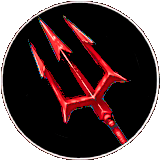 A symbol of the vital and individualistic pagan forces of nature and of now-vanquished gods such as Poseidon, the trident is not particularly Satanic. However, it can easily be used, and sometimes is, as a symbol of rebellion and defiance in the face of mainstream religious belief. To reclaim the trident and hold it proudly, as LaVey did, is to reveal to the world the truth that the slavery to the rule-by-fear of the medieval churches is over: strong independence can triumph over centralised dogma.
1. Greek, Roman, Hindu and Buddhist Usage
A three pronged spear - is one of the key attributes of Poseidon, the Greco-Roman god of waters, seas and storms, and a symbol of his authority. [...]
Hindus call the trident the trishul - it is associated with Shiva, and is a symbolic weapon against evil. Its three prongs symbolize the three gunas or qualities of nature: creation, preservation and destruction (also desire, action and wisdom). In Tantrism it is a Shamanic wand invested with powers against demons.
In the ancient Middle East the trident denoted lightening, and Buddhists link the trishul with the vajra or thunderbolt, and with the three jewels [...] It also symbolizes right knowledge, right belief and right conduct. The trishul is also the mark on the hood that identifies the sacred serpent.”
"1000 Symbols" by Shepherd, Rowan and Rupert (2002)1
Poseidon's power was great. With his trident, the weapons of tuna-fishers, he could provoke storms, set fire to the rocks on the shore and cause springs to gush up.”"Wordsworth Dictionary of Mythology, the" (1994)2
2. Christianity
Despite the good-natured uses of the trident in history, because they were used by "pagan" gods, when Christianity came to write the history books it portrayed the Trident as evil, just as it demonized foreign gods, it turned their tools into symbols of evil. The Christian devil, especially in the middle ages and dark ages, became a combination of elements from all the pagan gods. It gained horns and hoofs along with a trident, and with these the Christians employed it as a tool to scare pagans into Christian church and especially to scare Christians away from reasonable consideration of pagan practices and symbols.
3. In the Satanic Bible
There are no significant references to the Trident in The Satanic Bible3 except for a passing reference to playful paraphernalia in the introduction:
“Of course LaVey pointed out to anyone who would listen that the Devil to him and his followers was not the stereotyped fellow cloaked in red garb, with horns, tail and pitchfork, but rather the dark forces in nature that human beings are just beginning to fathom. How did LaVey square that explanation with his own appearance at times in black cowl with horns? He replied: "People need ritual, with symbols such as those you find in baseball games or church services or wars, as vehicles for expending emotions they can't release or even understand on their own."”
"The Satanic Bible" by Anton LaVey (1969)3 introduction.